
 Over the past year, our practice has seen an increasing number of patients for implant removal consultation. These are patients who have had implants in place for either cosmetic or reconstructive reasons. Patients have presented with a myriad number of complaints which have included many neurologic concerns not limited to memory loss, brain fog, dizziness, vertigo, confusion as well as physical ailments such as joint pains and muscle aches, GERD symptoms, kidney pain, sinus infections, bladder, and urinary issues, unexplained skin conditions, and rashes, even gout. Many complain of becoming increasingly debilitated due to chronic fatigue and have even suffered symptoms of depression and suicidal tendencies. In our professional experience, these are concerns that are becoming all too common in the breast implant patient.
Because these patient-reported symptoms tend to be more qualitative rather than quantitative. These concerns are oftentimes not treated with the appropriate level of attention by the plastic surgery community at large and the patients have aimlessly and unsuccessfully sought relief. Some sort of answers from their primary care physicians, specialists, blood work, and test after test with seemingly no end or hope for answers or a proper diagnosis to alleviate their symptoms and suffering.
Breast Implant Illness-Related Videos
Breast Implant Autoimmune Disease
However, a recent study has given some much-needed scientific support to these complaints suffered by many women with breast implants. The article is written by authors from the MD Anderson Cancer Center (Coroneos et al., 2018, Annals of Surgery) and reviews the long-term follow-up (large post-approval studies) data from the two primary implant manufacturers, Mentor and Allergan. Data from 99,993 patients are reviewed in this study. The study provides insight into the more systemic complaints associated with silicone and saline implants.
Data from the study demonstrates that in comparison with normative data, patients with silicone implants have higher rates of autoimmune disorders such as Sjogren’s syndrome, scleroderma, and rheumatoid arthritis. In 1992 the FDA prohibited the use of silicone breast implants for concerns that included cancer, connective tissue disease, and autoimmune disease. The Institute of Medicine went on to conclude that there was no evidence to support an association between breast implants and these systemic diseases. As a result, the FDA approved the current generation of silicone breast implants in 2006 for the two primary manufacturers, Mentor and Allergan. Despite the LPAS data being publicly available, this current study is the first to thoroughly analyze and report on this database.
Breast Implant Removal after Augmentation and Mastectomy
There is a troubling association in this study regarding the correlation between silicone breast implants and autoimmune diseases. Interestingly, both breast implant manufacturers are consistent with this LPAS data in reporting that more patient-reported rheumatologic symptoms are experienced by patients with silicone implants.
But it doesn’t stop their studies have also been found to associate silicone with a higher rate of stillbirth and melanoma skin cancer when compared to normative data. At seven years, the rate for breast revision surgery is 11.7% and 25% for breast reconstruction revision. Although nothing is 100%, this data cannot be ignored or even minimized.
An Ongoing Research to Address the Issues
The study does suffer from limitations. Chief among these limitations is that patients cannot be evaluated at an individual level so it is difficult to account for potential confounding conditions that could affect the interpretation of the data. Furthermore, data were collected under different protocols by both Allergan and Mentor, so a direct comparison between each company’s data is difficult.
Nonetheless, this data is important for plastic surgeons and patients to understand. Although many breast implant patients do not suffer from connective tissue or autoimmune ailments, there are certainly a significant number of patients with these concerns and the numbers are growing.
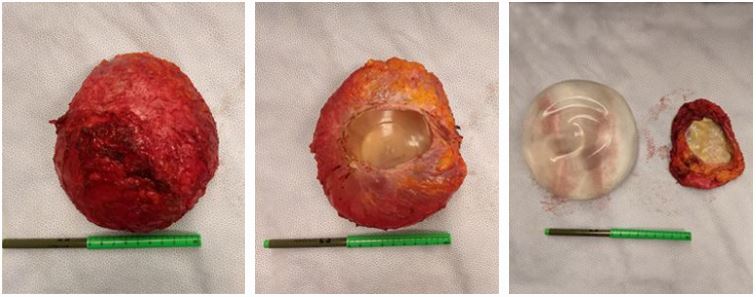
In our practice, our preferred method of treatment for women who come to us with complaints of unexplained suffering and the desire to ‘explant’ is an implant removal with en bloc, total capsulectomy.
Our protocol continues with sending the capsule for pathology, particularly if there is a concern for breast implant-associated ALCL lymphoma. It should be noted that in this particular study there has been one case of BIA-ALCL. On a lighter note, I have also found testimonials, too many to list, of increased energy, stamina, less joint and muscle pain, of the complete disappearance of unexplained suffering, and an undeniable amount of women insisting that the once unexplained decline in their health is on the mend. They have become the proof positive of something that undeniably needs further investigation.
So, as we continue to follow up on breast implant-associated conditions, we’re hoping to shed increasing light into what might increase the risk for some patients being more susceptible to developing these types of symptoms and what factors may make it safer for others. Either way, it is absolutely necessary to increase awareness of these conditions among patients and plastic surgeons so that together we can evaluate and hopefully alleviate the chronic suffering that too many patients have and are still too often experiencing.