
Rhinoplasty in Ohio
Reshape your nose to improve facial balance, breathing, or both. Rhinoplasty can refine the size, shape, and symmetry of your nose while addressing structural concerns that may affect breathing.
What Is Rhinoplasty?
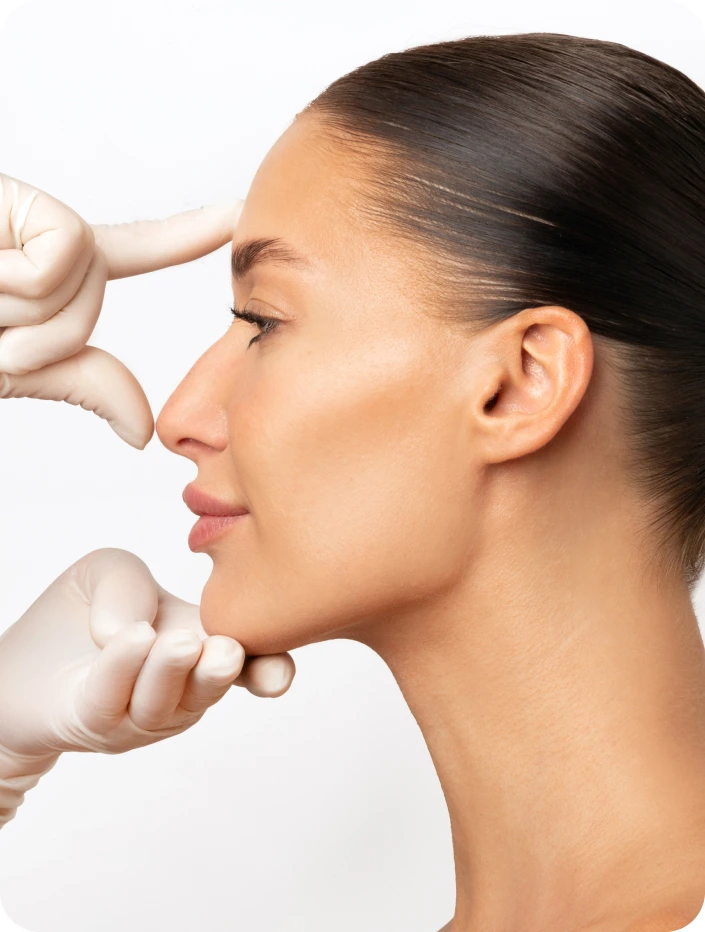
Rhinoplasty is a surgical procedure that reshapes the nose to improve its appearance, function, or both. Whether you want to refine a prominent bridge, reshape a drooping tip, correct asymmetry, or improve breathing related to an injury or structural concern, your procedure is customized to your anatomy and goals.


Refine Your
Nose Profile
Smooth a prominent bridge, soften a dorsal hump, or create a more balanced nose that complements your facial features.

Enhance Shape
and Symmetry
Reshape a drooping or rounded tip, reduce asymmetry, and improve overall proportion while preserving natural support.
Restore
Function
Addresses structural concerns, such as a deviated septum or changes after nasal injury, to improve breathing while supporting your aesthetic goals.
Is Rhinoplasty Right for Me?
Rhinoplasty may be appropriate for healthy adults who want to improve nasal appearance, breathing, or both.
Good Candidates for Rhinoplasty
- Your nose appears disproportionate to your facial features.
- You have concerns about the bridge, tip, width, or overall shape.
- You experience breathing problems related to nasal structure.
- You have fully developed facial bones.
- You are in good overall health and committed to a nicotine-free recovery.
How It Works
Every rhinoplasty begins with careful planning. Your surgeon evaluates the external appearance and internal structures of your nose to develop a treatment plan tailored to your anatomy, goals, breathing function, and long-term nasal support.
01
02
03
04
Types of Rhinoplasty
Open
Rhinoplasty
How it works: A small incision is made across the columella, allowing the surgeon greater visibility to the nasal bones and cartilage for detailed reshaping
Best for: Patients requiring comprehensive reshaping of the bridge, tip, or internal structures
Best for: Patients with good skin elasticity who only need fat removal, rather than skin or muscle tightening.
Closed
Rhinoplasty
How it works: All incisions are made inside the nostrils, allowing the surgeon to reshape the nose through internal incisions without an external columellar incision
Best for: Patients needing more limited refinement with minimal visible scarring
Best for: Correcting prominent vertical neck bands and restoring a sharp, defined angle to the neck.
Functional
Rhinoplasty
Internal structures, such as the septum or nasal valves, are corrected to improve airflow while preserving or enhancing appearance when appropriate
Best for: Patients whose primary goal is improving breathing caused by structural concerns
Best for: Comprehensive rejuvenation of moderate to severe skin laxity and deep tissue sagging.
Revision
Rhinoplasty
How it works: Previous surgical changes are carefully evaluated before the nasal framework is revised to address concerns with appearance, function, or both
Best for: Patients seeking correction or improvement after a previous rhinoplasty
refinement with minimal visible scarring
Best for: Comprehensive rejuvenation of moderate to severe skin laxity and deep tissue sagging.
Recovery Timeline
First Few Days
A protective nasal splint may be worn during the early healing period. Swelling, bruising around the eyes, and nasal congestion are common.
Weeks 2-3
Bruising continues to fades, and most patients return to work and light daily activities.
Weeks 4-6
Light exercise may resume with your surgeon’s approval. Activities that could have direct impact to the nose should be avoided.
Months 3-6+
Swelling continues to decrease, particularly around the nasal tip. Subtle changes may continue as the nose heals and your results gradually develop.
Frequently Asked Questions
Will my nose look natural after rhinoplasty?
Yes. Our approach focuses on enhancing facial harmony rather than creating an overly altered appearance. Every surgical plan is customized to complement your existing features.
Can rhinoplasty improve my breathing?
It can. If structural issues such as a deviated septum or weakened nasal support contribute to breathing difficulties, functional corrections may be performed as part of your surgical plan.
Can I wear glasses after surgery?
For several weeks, you’ll need to avoid placing pressure on the healing nasal bones. Your surgeon will provide guidance on when it is safe to resume wearing glasses or sunglasses normally.
How long do rhinoplasty results last?
Rhinoplasty provides long-lasting results. While your face will continue to age naturally, the structural changes made during surgery are intended to remain stable over time.
*This page is for educational purposes only and is not a substitute for a consultation with a board-certified surgeon. Every patient is unique, and treatment recommendations and results vary. We encourage you to schedule a consultation with our team to discuss your options.
Schedule a Consultation
If you’re considering rhinoplasty, we’re here to help you move forward with confidence. Schedule a consultation to discuss your goals and create a personalized treatment plan.