
Eyelid Surgery in Ohio
Eyelid surgery lifts heavy upper lids, softens under-eye puffiness, and restores smoother contours around the eyes by removing excess skin and repositioning stubborn fat for a brighter, more refreshed appearance.
What Is Eyelid Surgery?
Eyelid surgery, clinically known as blepharoplasty, addresses the structural changes that occur as the delicate skin and tissues around the eyes age. This procedure gently removes excess skin and carefully repositions underlying fat to help relieve hooding and reduce the appearance of under-eye bags.

Rested Expression
Relieves heavy, hooded eyelids to restore a naturally alert appearance
Functional Improvement
Can improve your field of vision by addressing overhanging upper eyelid skin
Balanced Contours
Redistributes under-eye fat to smooth the transition between your eyes and cheeks
Is Eyelid Surgery
Right for Me?
Eyelid surgery may be a suitable option if you are experiencing upper or lower eyelid changes that make you look tired or functionally impair your vision.
Good Candidates for Eyelid Surgery
- You experience drooping upper eyelids that feel heavy or obstruct peripheral vision
- You notice puffiness or pronounced bags under your eyes that do not respond to rest
- You are in good overall health without serious, unmanaged eye conditions
- You commit to abstaining completely from all nicotine products
How It Works
Performed as an outpatient procedure under general anesthesia or deep IV sedation, a brow lift requires careful surgical planning tailored to your facial anatomy.
01
Incision Placement
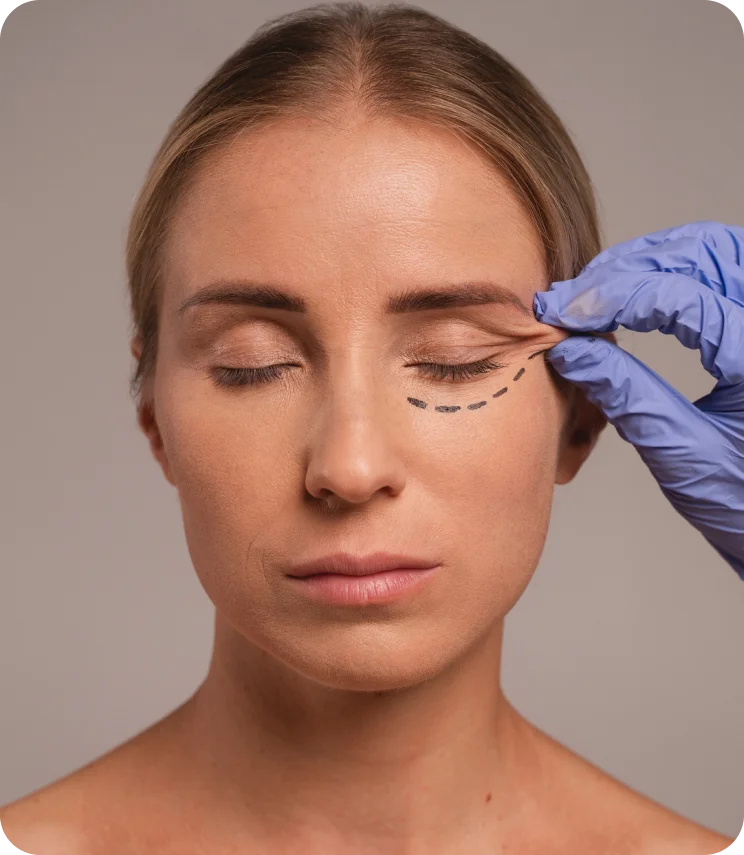
Discreet incisions are strategically placed. For the upper eyelid, these are typically hidden within the natural skin crease. For the lower eyelid, incisions are made just below the lash line or hidden inside the lower eyelid.
02
Tissue Adjustment
Your surgeon gently removes excess skin. Depending on your needs, the underlying muscle may be modified, and bulging orbital fat is either carefully excised or repositioned to fill in hollow areas like the tear trough.
03
Closure
The incisions are closed with ultra-fine sutures to minimize visible scarring, securing the repositioned tissue as it begins the healing process.
Types of Eyelid Surgery
Your anatomy, skin elasticity, and primary concerns help determine the most appropriate surgical approach.
Upper Blepharoplasty
How it works: An incision hidden within the upper eyelid crease removes excess skin and refines the underlying tissue
Best for: Patients with heavy, hooded upper eyelids (dermatochalasis) that may contribute to a tired appearance or reduced upper field of vision
Lower Blepharoplasty (Transconjunctival)
How it works: A discreet incision hidden on the lower eyelid repositions bulging orbital fat without leaving an external scar
Best for: Younger patients or individuals whose main issue is bulging under-eye fat with good skin elasticity and no excess skin to remove
Lower Blepharoplasty (Transcutaneous)
How it works: An incision beneath the lower lash line refines excess skin and underlying tissue
Best for: Older patients or individuals who have significant skin laxity, fine lines, wrinkles, skin laxity, and muscle relaxation alongside under-eye bags
Combined Upper and Lower Blepharoplasty
How it works: Both upper and lower eyelids are treated during a single procedure for comprehensive rejuvenation
Best for: Patients seeking balanced improvement throughout the eye area
Recovery Timeline
First Few Days
Swelling, mild bruising, and transient symptoms like dry eye or tightness are expected.
Weeks 1-2
Acute swelling visibly fades. Sutures (if non-dissolving) are typically removed. Most patients are cleared to return to desk work and light daily activities.
Weeks 3–4
Tissues continue to settle and heal securely. Slowly resume light physical exercise once cleared by your surgeon.
Months 1–3+
Deep tissue healing finalizes, revealing a refreshed, natural contour as fat repositioning settles. Resume all normal physical activities and enjoy your refined results.
Frequently Asked Questions
Will eyelid surgery change the shape of my eyes?
The goal of blepharoplasty is to restore your natural, rested appearance, not to alter your fundamental eye shape. By using conservative techniques, especially fat repositioning rather than aggressive removal, the procedure respects your natural anatomy while reducing puffiness and hooding.
Are the results of blepharoplasty permanent?
While eyelid surgery provides long-lasting structural improvements, it does not stop the natural aging process. The repositioned fat and excised skin offer long-lasting results, though natural changes in skin elasticity will slowly continue over many years.
Can eyelid surgery improve dark circles?
If dark circles are caused by under-eye bags or tear trough shadows, lower eyelid surgery may provide noticeable improvement. Pigmentation-related dark circles may benefit from additional skin treatments.
When can I wear makeup or contact lenses again?
Most patients can resume makeup and contact lenses after the eyelids have healed sufficiently, typically within a couple of weeks. Your surgeon will provide personalized guidance based on your recovery.
*This page is for educational purposes only and is not a substitute for a consultation with a board-certified surgeon. Every patient is unique, and treatment recommendations and results vary. We encourage you to schedule a consultation with our team to discuss your options.
Schedule a Consultation
If you’re considering eyelid surgery, we’re here to help you move forward with confidence. Schedule a consultation to discuss your goals and create a personalized treatment plan.