
Facelift in Ohio
A facelift restores youthful facial contours by lifting and repositioning deeper facial tissues. At Midwest Breast & Aesthetic Surgery, we use advanced surgical techniques to restore your natural contours, lifting and repositioning deeper facial tissues to deliver balanced, natural-looking results that look refreshed.
What Is a Facelift?
Clinically known as a rhytidectomy, a modern facelift corrects visible signs of aging in the cheeks, lower face, and neck. It gently lifts deeper facial tissues and repositions facial fat, allowing the skin to drape naturally for a refreshed appearance.


Natural-Looking
Rejuvenation
Restore youthful contours while preserving facial expression.

Advanced Surgical
Techniques
Lift and reposition deeper facial tissues for lasting support.

Personalized
Planning
Every procedure is tailored to your anatomy and goals.
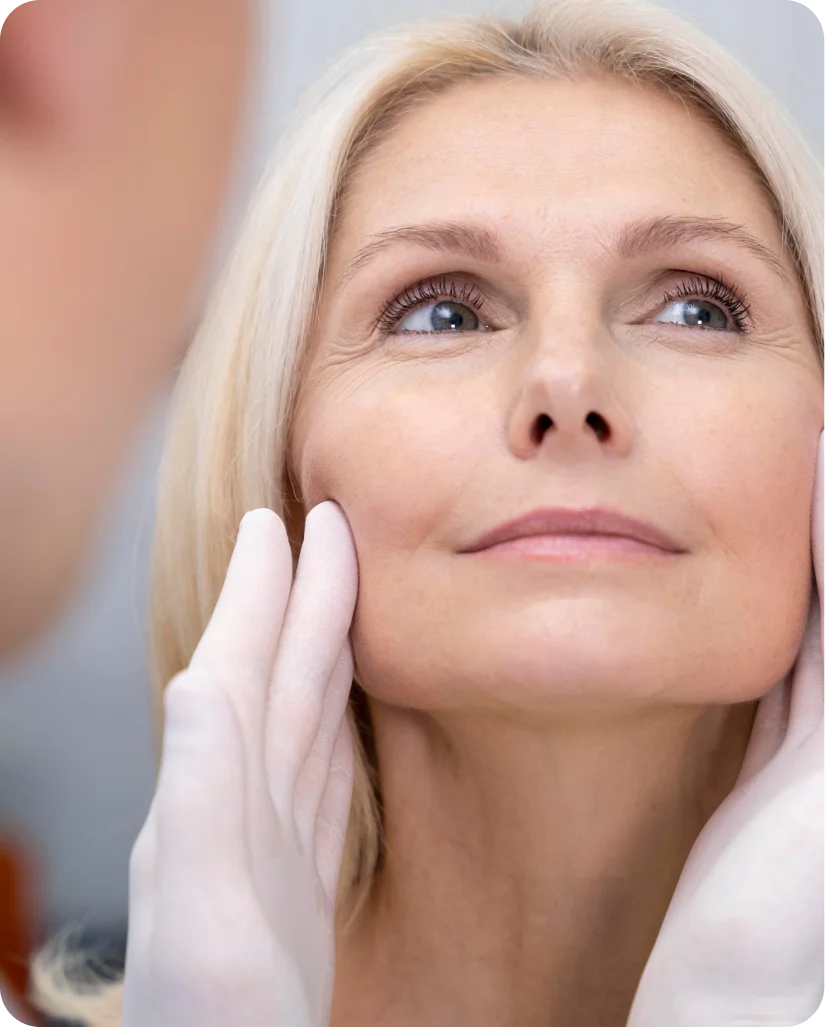
Is a Facelift Right for Me?
A facelift may be a good option if you’re noticing changes in your facial contours that may not improve with skincare or non-surgical treatments alone.
Good Candidates for a Facelift
- You want to smoothen deep facial folds, sagging jowls, or volume loss.
- You wish to refine your neck and jawline.
- You have some natural skin elasticity (often between ages 40 and 60, though not exclusively).
- You are in good overall health.
- You are committed to a nicotine-free recovery to ensure safe healing.
How It Works
Every facelift is designed around your unique facial anatomy and aging pattern.
01
Incision Placement
Discreet incisions are typically concealed within the hairline at the temples, extending naturally in front of and behind the ears, and ending in the lower scalp.
02
Deep Tissue Mobilization
Your surgeon accesses the SMAS layer to lift and secure the foundational structures of the cheeks and jawline.
03
Ligament Release
Depending on the technique, facial retaining ligaments may be carefully released to allow the midface and lower face to move together more naturally.
04
Draping and Closure
Excess skin is conservatively trimmed, and incisions are closed with minimal tension to prevent visible scarring and preserve the natural shape of your earlobes.
Types of Facelift
The right technique depends on your facial anatomy, the degree of aging, and your long-term goals.
SMAS Facelift
How it works: Tightens or removes a small section of the deep supportive layer (SMAS) beneath the skin to elevate the lower facial tissues.
Best for: Patients wanting to address neck laxity and moderate jowling, resulting in a defined, natural lower face.
Deep Plane Facelift
How it works: Dissects fully beneath the deep muscle layer to lift the skin, muscle, and fat together as one seamless unit without tension.
Best for: Patients needing significant lifting in the cheeks and deep smile lines, providing long-lasting structural support and natural facial movement.
Mini Facelift
How it works: Uses shorter incisions to target mild to moderate sagging in the lower face.
Best for: Younger patients with early signs of aging who do not need extensive neck contouring.
Recovery Timeline
First Few Days
Swelling and bruising are expected. Keeping your head elevated helps support early healing.
Weeks 1-2
Bruising and swelling begin to improve, and many patients return to light desk work or social activities within 10 to 14 days.
Weeks 3–4
Incisions heal securely. You can slowly resume light exercise once cleared by your doctor.
Months 3–6
Swelling continues to improve, revealing softer, more refined facial contours over time.
Frequently Asked Questions
Will a facelift change the shape of my eyes or brow?
No. A standard facelift targets the cheeks, jawline, and neck. To address drooping eyelids or a heavy brow, your surgeon can safely combine your face lift with eyelid or brow surgery during the same operation.
How long do the results last?
A facelift “resets the clock” by restoring youthful structure, but it does not stop natural aging. Most patients enjoy their refined look for many years. Maintaining a stable weight, using quality skincare, and wearing sunscreen will help preserve your results.
Does a Deep Plane facelift have a longer recovery?
Because this technique lifts beneath the muscle in a natural plane, some patients actually experience less bruising. However, deep swelling can sometimes last slightly longer than a standard lift. Your surgeon will give you a detailed recovery timeline based on your specific plan.
Will a face lift improve my skin texture or age spots?
No. A facelift is designed to lift and restore underlying facial structure and sagging tissue. If you want to address sun damage, fine surface wrinkles, or uneven skin tone, your surgeon may recommend combining your procedure with laser skin resurfacing or chemical peels for a comprehensive result.
*This page is for educational purposes only and is not a substitute for a consultation with a board-certified surgeon. Every patient is unique, and treatment recommendations and results vary. We encourage you to schedule a consultation with our team to discuss your options.
Schedule a Consultation
If you’re considering a facelift, we’re here to help you move forward with confidence. Schedule a consultation to discuss your goals and create a personalized treatment plan.