
Tummy Tuck in Ohio
Abdominoplasty, commonly known as a tummy tuck, is a surgical procedure that removes excess abdominal skin and fat while restoring weakened or separated abdominal muscles.
What Is a Tummy Tuck?

Smoother
Contour
Removes excess skin and creates a firmer abdominal profile.

Core
Support
Repairs separated abdominal muscles when appropriate.

Natural-Looking
Results
Restores balanced proportions tailored to your body.
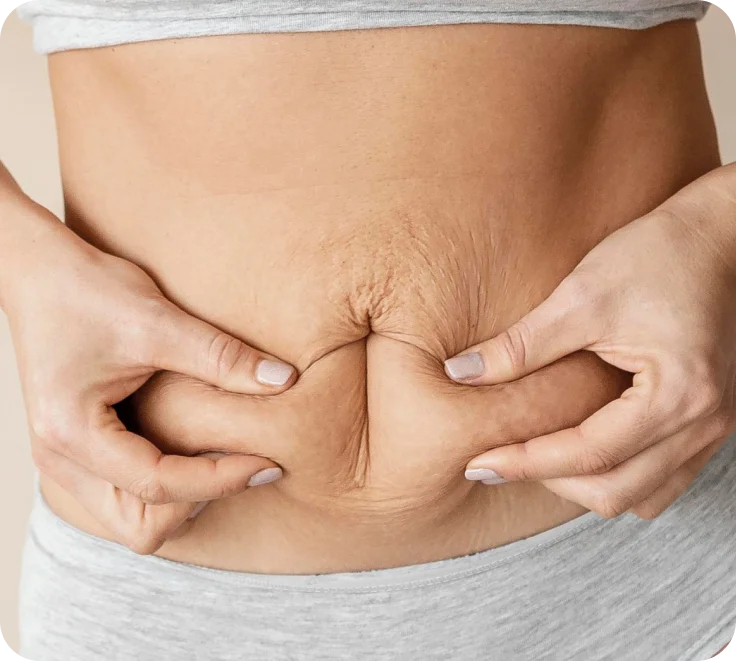
Is a Tummy Tuck Right for Me?
A tummy tuck may be a good option if you’re looking to address loose abdominal skin, weakened core muscles, or changes that haven’t improved with diet and exercise alone.
Good Candidates for a Tummy Tuck
- You maintained a stable weight within 10 to 15 pounds of your goal for at least six months.
- You do not plan future pregnancies.
- You are free of unmanaged medical conditions that could impair healing.
- You are willing to abstain from all nicotine products for several weeks.
How It Works
Every tummy tuck is tailored to the amount of skin laxity, muscle separation, and contouring needed.
01
Incision Placement
A horizontal incision is made just above the pubic area, keeping it low enough to be concealed by most clothing.
02
Muscle Repair (Rectus Fascia Plication)
Your surgeon accesses the separated abdominal muscles and uses internal sutures to pull them back together at the midline, re-establishing a firm internal abdominal wall.
03
Tissue Removal and Redraping
Excess skin and fat are removed. The remaining healthy skin is pulled taut and closed in precise layers.
04
Umbilical Repositioning
In traditional techniques, the belly button is brought through a new opening in the re-draped skin to maintain a natural appearance.
Types of Tummy Tuck
Your natural anatomy and the extent of your tissue laxity help determine the required surgical approach.
Mini
Tummy Tuck
How it works: Uses a very short incision to remove a small amount of lower abdominal skin and tighten the lower wall.
Best for: Lower belly concerns
Full (Traditional)
Tummy Tuck
How it works: Removes excess lower abdominal fat and skin while tightening internal muscles from the breastplate to the pubic region.
Best for: Overall abdominal contouring
Fleur-de-Lis
Tummy Tuck
How it works: Combines a full tuck with a vertical incision to tighten the abdomen in two different directions.
Best for: Patients with massive weight loss.
Circumferential Tummy Tuck (Belt Lipectomy)
How it works: Removes tissue from the front, sides, and back. The resulting scar forms a concealable “belt” around the torso.
Best for: 360-degree lower torso reshaping.
Recovery Timeline
First 24 Hours
You will go home with temporary drain tubes (for up to 10 days) to prevent fluid buildup and must wear a compression garment 24/7.
Week 1
Rest at home with the assistance of a loved one. Manage any discomfort with your prescribed pain medication.
Week 2
Once your drains are removed, you can safely resume showering, light chores, driving, and work.
Weeks 3–5
Transition to wearing your compression garment for several hours a day while your abdomen settles into its new shape.
Weeks 6–8
Your results are considered final, with minor settling continuing for up to 3 months. Your scars will thin and fade over time, easily hiding beneath your clothing.
Frequently Asked Questions
How does a tummy tuck differ from liposuction?
Liposuction is minimally invasive; it only extracts fat and does not tighten skin. A tummy tuck, on the other hand, removes fat, excises loose skin, and physically repairs stretched abdominal muscles.
Can I get a tummy tuck right after a C-section?
No. A “C-tuck” is highly discouraged because postpartum skin and muscles are too lax, risking over-tightening and permanent damage. You should wait 6 to 12 months after delivery before pursuing surgery.
Is it normal for my stomach to feel hard after surgery?
Yes. Your repaired abdominal muscles can continue to contract up to two years, causing a firm sensation. Please contact us if this is accompanied by sharp pain or lasts beyond the expected time frame.
What if I want to adjust my results later?
A revision tummy tuck can address any aesthetic or functional concerns. However, you must wait up to a year for your initial surgical results to completely settle before undergoing a secondary procedure.
Are complications common with a tummy tuck?
When performed on healthy, non-smoking candidates by a board-certified plastic surgeon, the procedure is very safe. The most frequently reported minor complications are fluid collections (seromas) under the skin, which are managed in-office.
Will a tummy tuck fix my diastasis recti permanently?
Yes. Rectus diastasis repair is a foundational step in a traditional tummy tuck. Unless compromised by a future pregnancy or significant weight gain, the muscle repair is permanent and restores functional abdominal core strength.
Where will my scar be located?
In a traditional procedure, the horizontal scar runs just above the pubic region, designed to be hidden beneath most underwear or swimsuit bottoms. While the scar is permanent, diligent aftercare helps it fade significantly over the first year.
*This page is for educational purposes only and is not a substitute for a consultation with a board-certified surgeon. Every patient is unique, and treatment recommendations and results vary. We encourage you to schedule a consultation with our team to discuss your options.
Schedule a Consultation
If you’re exploring top surgery or reverse top surgery, we’re here to help you move forward with confidence. Schedule a consultation to discuss your goals and create a personalized treatment plan.